
CONVERSATION WITH CFO
Staying in control when markets change
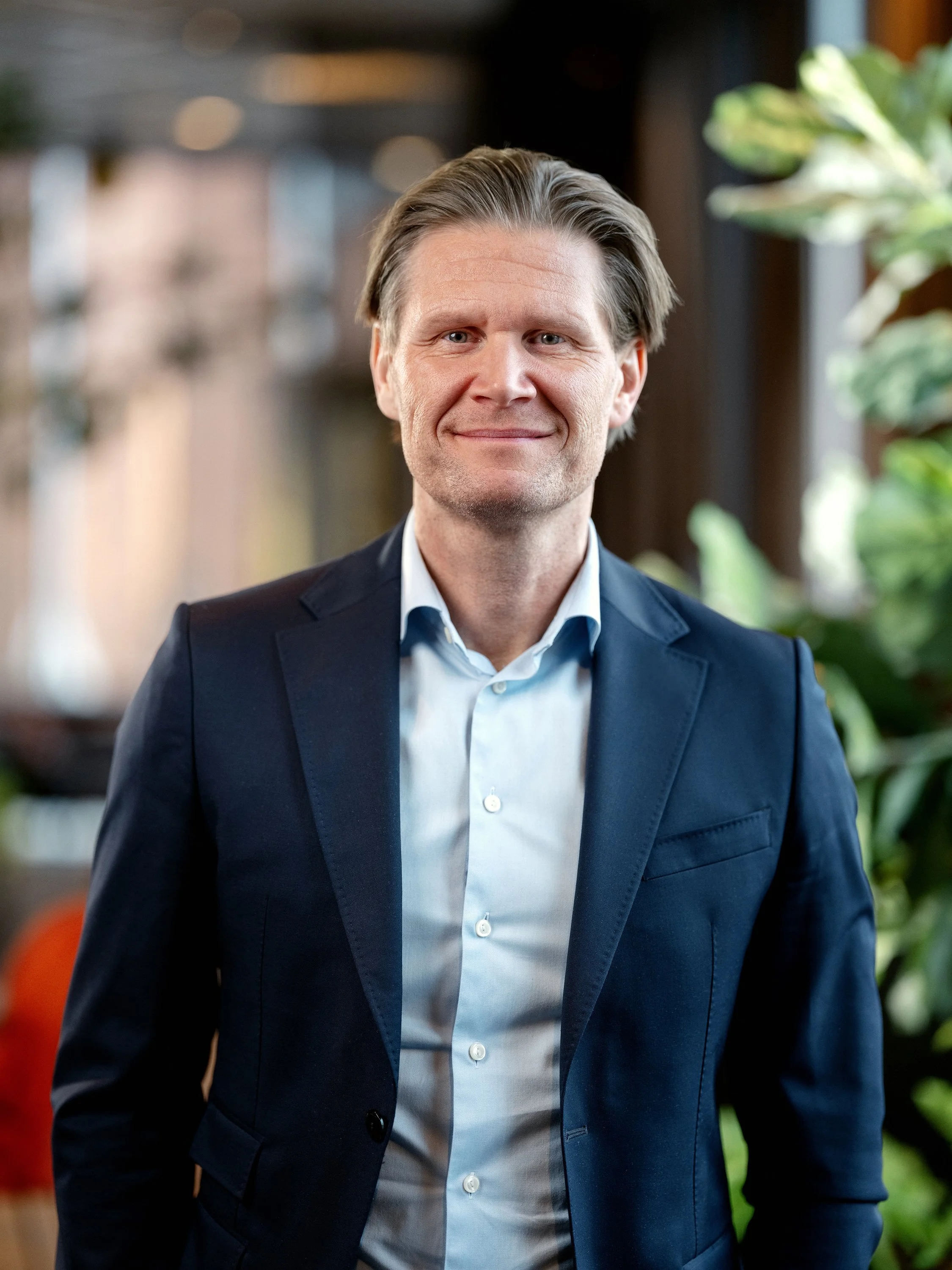
2025 was a year of disciplined execution. 2025 was a year of disciplined execution. Financing conditions tightened, and expectations remained high. Against that backdrop, Advania returned to growth, delivering SEK 18.4 billion in revenue and 22% growth. Performance improved across several markets, margins finished above budget, and cash generation exceeded expectations.
For Henrik Schibler, Advania’s CFO, those results are not about a rebound or a turning point. They are about staying in control.
“We didn’t change strategy in 2025,” he says. “We focused on execution and on making sure the fundamentals were solid.” That focus shaped both the results and the way the finance function itself evolved over the year.
2025 performance and what it tells us
Henrik is clear that 2025 was never about chasing growth at any cost. It was about restoring predictability and ensuring that growth translated into resilience.
“You have to be clear about what matters,” he says. “Top-line growth is important, but only if it comes with margin discipline and strong cash generation.”
That balance is visible in the year’s cash performance, which exceeded our expectations. For Henrik, cash conversion is one of the most telling indicators of whether the business is functioning as intended. “Cash tells you whether the value you create is real,” he says. “It gives you flexibility and room to act.”
A finance function built for decision-making
One of the most meaningful changes in 2025 happened behind the scenes. The finance team itself raised its level. Reporting, analytics, and forecasting were significantly strengthened across the group, with a clear objective: to make finance more relevant to day-to-day decisions.
“We didn’t want more reports,” Henrik explains. “We wanted better insight, delivered faster, and in a way that leaders across the organisation can actually use.”
This work is foundational for a decentralised model. When local leaders have access to consistent, reliable data, accountability increases and decision-making improves.
“Decentralisation only works if everyone trusts the numbers,” he says. “That trust comes from clarity and consistency.”
When leaders understand the financial framework, they make better decisions.
Debt repricing and keeping perspective
The repricing of Advania’s debt in 2025 drew attention, but from Henrik’s perspective it was not the defining issue of the year.
“This was a technical adjustment, not a strategic change,” he says. “The important question was whether the balance sheet remains robust and flexible. It does.”
Rather than focusing on short-term rate movements, Henrik emphasises cash generation, covenant headroom, and long-term financial resilience.
“In volatile environments, it’s easy to get distracted by individual line items,” he says. “Staying in control means focusing on the things that actually determine whether the company can fund its strategy and absorb uncertainty.”

Finance as an enabler of the business
With stronger insight and a solid financial foundation, finance plays a more active role in enabling the business.
“Discipline is not about slowing things down,” Henrik says. “It’s about creating the conditions where you can act with confidence.” That applies to investments, acquisitions, and continued focus on customers and people. It also reinforces alignment across markets.
“When leaders understand the financial framework, they make better decisions,” he says. “This benefits the business and, ultimately, our customers.”
For Henrik, this is the real purpose of strong financial management: to give local Advania entities the stability and clarity they need to serve customers effectively.
“Our role in finance is to make sure local teams have what they need to focus on customers,” he says. “Strong cash flow, clear reporting, reliable forecasting. When the fundamentals are solid, teams can concentrate on delivering value rather than managing uncertainty.”
Looking back at 2025, Henrik is satisfied with what was achieved and confident in the foundation it provides for 2026. “We delivered what we said we would,” he says. “Strong growth, improved margins, excellent cash generation. More importantly, we strengthened the fundamentals that allow us to keep building. That gives us real options going forward.”